
How do we make it work?
Home practice between online speech therapy sessions
Home practice is short, guided practice between sessions, set and checked by the speech pathologist. What it looks like for...
Speech Sounds And Lisps
A lisp and other unclear speech sounds can usually be worked on by video. Dr Lauren Crumlish (PhD), Certified Practising Speech Pathologist, watches your child's lips, teeth and tongue close up on camera as each sound is made, decides what to practise next, and shows you how to help with short practice between sessions.

The short answer
Often, yes. Speech sound therapy is mostly showing, listening and practising, and each of those can happen on a video call when the camera shows your child's mouth clearly and the sound comes through cleanly.
A lisp is when 's' and 'z' come out wrong, for example with the tongue pushed forward so that 's' sounds like 'th', or with air escaping over the sides of the tongue. Dr Lauren's first job is to find out which sounds are affected and why, and that also tells her whether video suits your child.
Online Speech Therapy is an online service: every session is by video.
On Screen
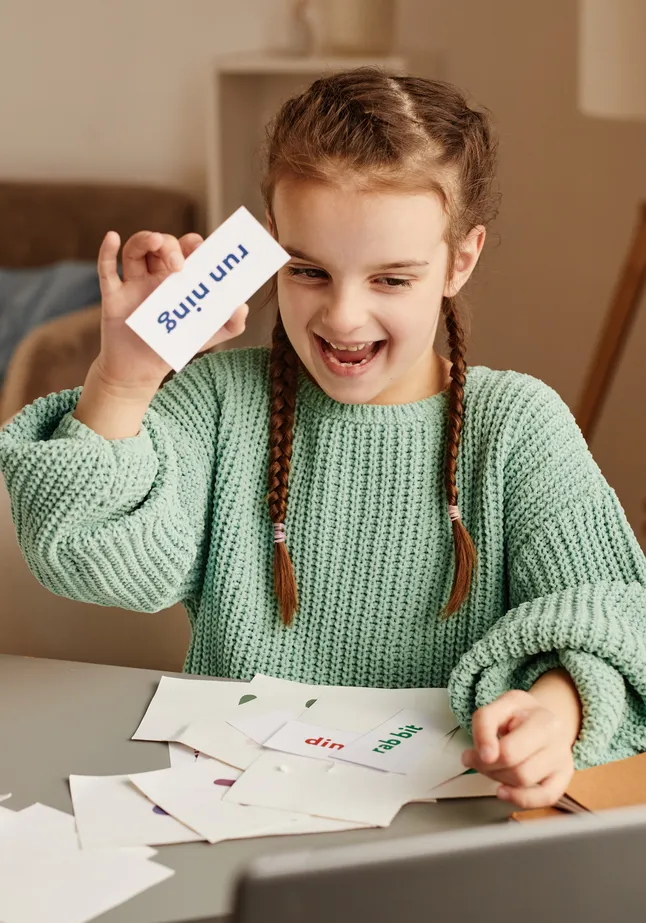
A session on speech sounds is close up and active. These are the parts a parent sees; how Dr Lauren arranges each one for your child is decided at the assessment.
Your child sits close to the screen with light on their face, so Dr Lauren can watch the lips, teeth and tongue as each sound is made
The new sound is shown on screen first, then your child copies it and hears straight away when it is right
Practice builds in steps: the sound on its own, then in words, then in sentences, then in ordinary talk
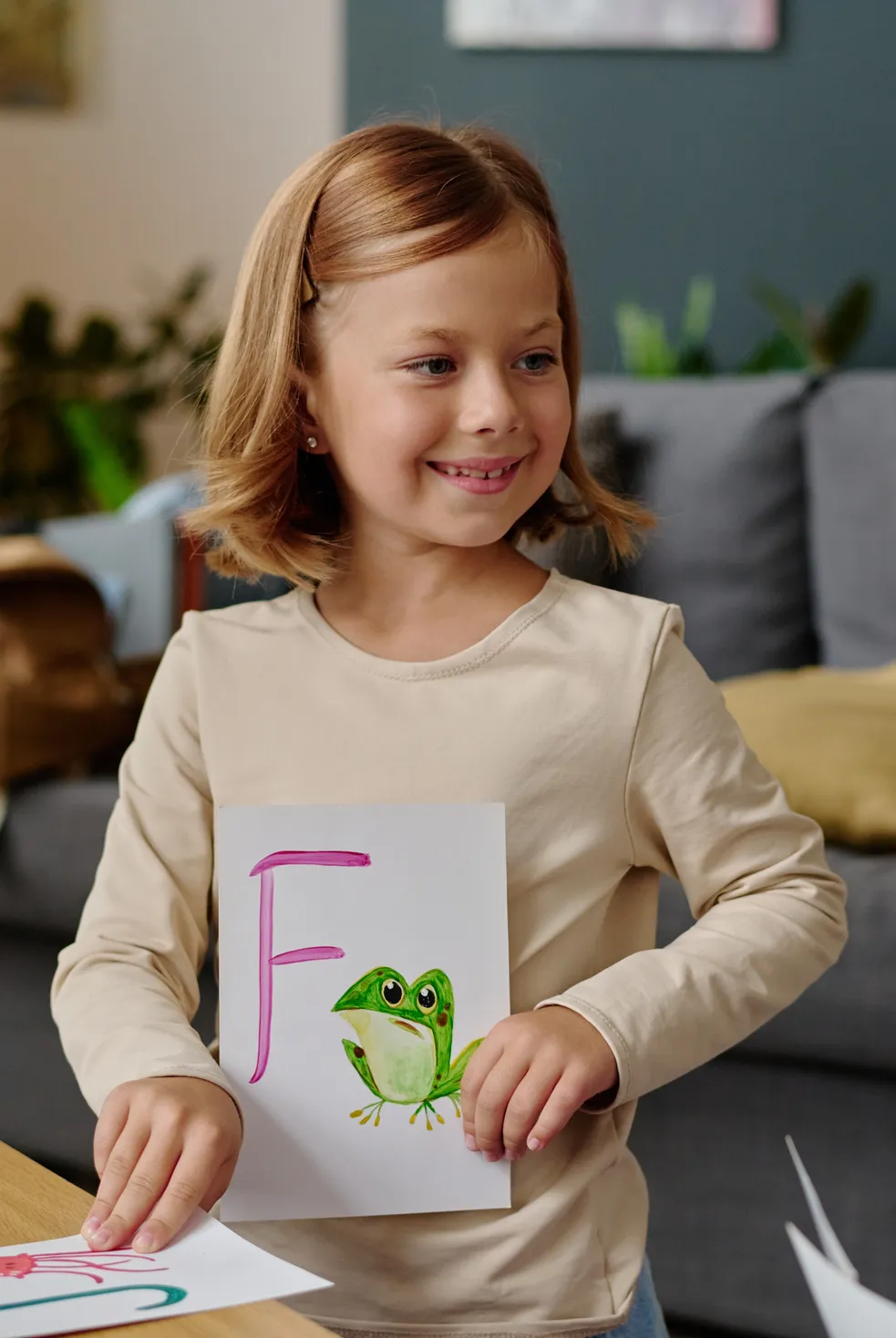
Pictures and games keep a run of practice going without it feeling like drill
For a younger child, a parent stays nearby, hears what a correct sound is and learns when to praise it
Sound work depends on detail: whether the tongue is behind the teeth, whether the air goes forward or out the sides. That makes the camera and the room matter more than they do for most online therapy. A laptop or tablet at your child's face height, light from in front rather than a bright window behind, and a quiet room do most of the work. The page on technology and set-up has the full checklist.
Dr Lauren decides which sound to start with, when a sound is reliable enough to move on, and when the plan needs to change. Your part is short, guided practice between sessions. In the session she shows you what the new sound looks and sounds like for your child, so the practice at home is the right sound and not the old one. The guide to home practice between online sessions explains what that practice looks like.
The same way of working applies to any sound a child finds hard. The 'r' sound is one of the later sounds most children learn, so it often comes up with school-age children and teenagers. Which sound is worked on first, and whether it is a lisp or something else, comes from the online assessment, not from a set program.
Dr Lauren works with childhood apraxia of speech, a speech disorder in which a child has difficulty planning the movements needed to say sounds and words. Therapy for it is often intensive, with a lot of repeated practice. An Australian trial delivered one treatment, Rapid Syllable Transitions (ReST), entirely by video to five children aged 5 to 11, four times a week for three weeks, and found gains similar to those in earlier studies of ReST given in person. Five children is a very small study, and how often your child's sessions run is something Dr Lauren sets after the assessment.
A study comparing school-age children who had speech sound therapy online with children seen in person found similar progress. It looked back at records rather than assigning children to one group or the other, and does online speech therapy work? sets out what that does and does not show. If your child's hearing has not been checked, start with a hearing check through your GP. If their therapy relies on touch to guide the mouth, in-person help is the better start. The guide is online speech therapy right for my child? lists when. For a whole session from start to finish, see how online speech therapy works.
How It Runs
Every family follows the same path, and Dr Lauren leads each step after the application.
Tell us about your child's speech on the application form. Our team will review your application.
Dr Lauren assesses your child's speech sounds by video, then talks you through what she found and the plan.
She runs each 45 minute session with your child, sets the targets and decides when a sound is ready to move on.
Short practice at home, shown step by step in the session, so the new sound gets used through the week.
Fees
Speech sound work usually starts with the Short Assessment ($590). Every family starts with an assessment, and sessions at $193 follow if therapy is recommended.
Therapy
One hour of service: 45 minutes of therapy by video, and 15 minutes of preparation and notes
$193
Every family starts with an assessment
$590
Usually for late talkers, stuttering and speech clarity
$890
Usually for school-age language, literacy or social communication
$1,290
Usually for both language and literacy in a school-age child
Medicare rebates are available with a doctor's referral, and private health may apply. Online Speech Therapy is not NDIS registered: self-managed and plan-managed participants are welcome. See fees in full
Questions Parents Ask
A lisp can usually be worked on by video, because the therapy is watching, copying and practising a sound, which a camera and a clear connection allow. Dr Lauren assesses your child first, and the assessment shows whether video suits the sounds your child is working on. No speech pathologist can promise a result before that.
There is no need to wait for a set age. The Royal Children's Hospital Melbourne advises that a speech pathologist should assess a child whenever there is a concern about how they say sounds. An assessment either sets a plan or tells you nothing needs doing yet.
Nobody can say before an assessment. It depends on which sounds are affected, how long the habit has been there and how much practice happens between sessions. Dr Lauren gives her recommendation once she has assessed your child.
For a younger child, yes: a parent nearby helps with the set-up and learns what the correct sound is, so practice at home is right. Teenagers usually attend sessions on their own.
A laptop or tablet set at your child's face height works best, because Dr Lauren needs a clear, steady view of the mouth. A phone is a last resort for sound work: the picture is small and it tends to move.
No. Dr Lauren works with children and teenagers up to 18.





Work With Dr Lauren
Dr Lauren works with a small number of families and has limited availability. Tell us about your child, and our team will review your application.
Apply Now